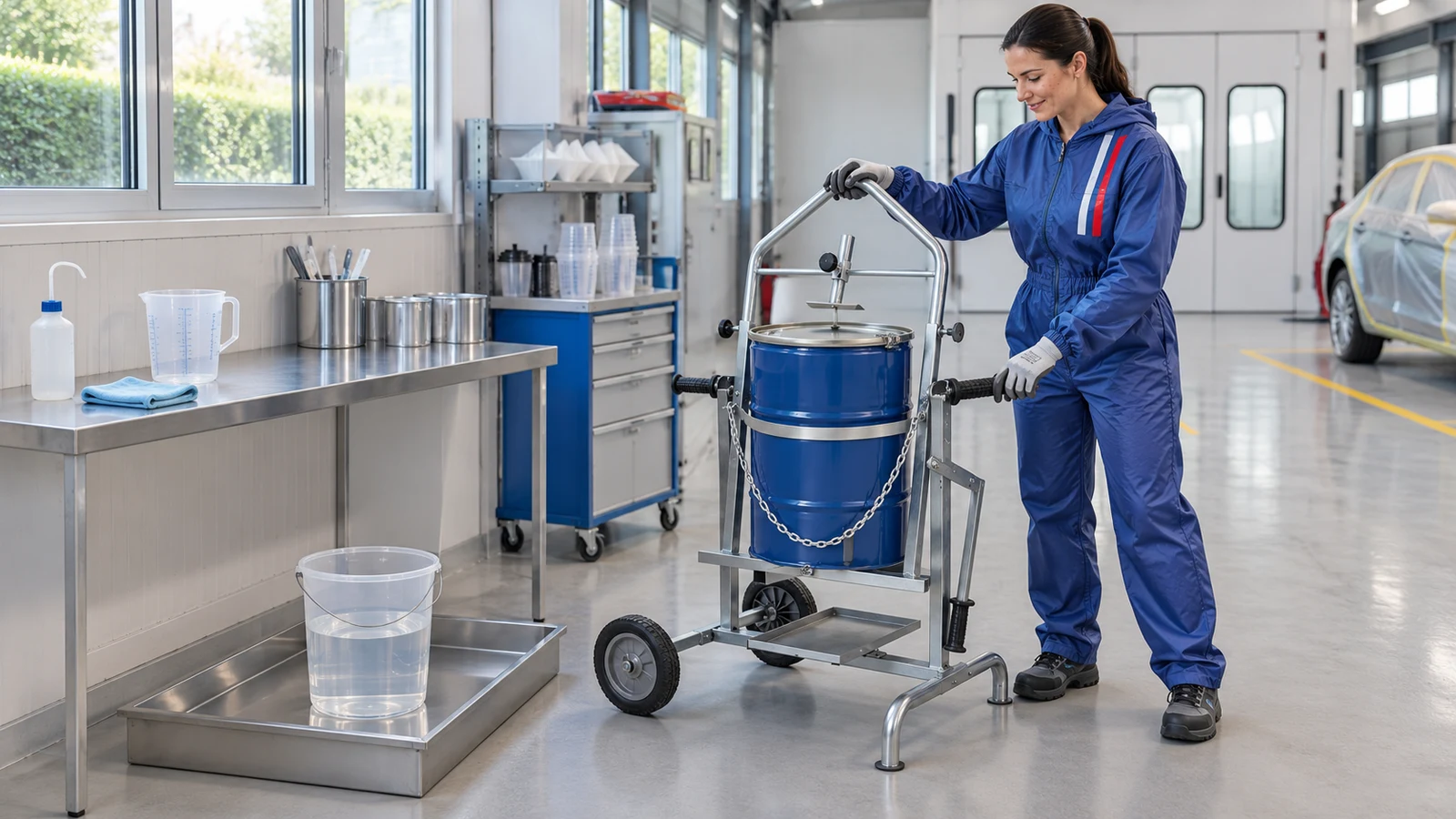
Describe the workflow before the footprint
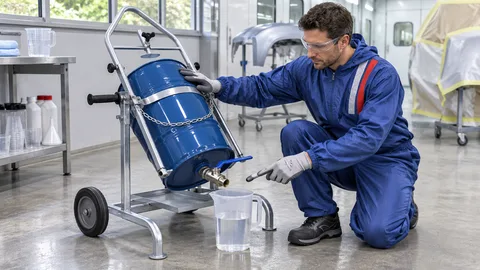
Record where the drum comes from and where its contents will go. Define whether the receiver stands on the floor, a suitable support or another intended location. This creates specific questions about outlet height and access.
Include the people using the station. Repeated vessel rearrangement or blocked access shows the workflow is not fully planned.
Allow movement with the drum mounted
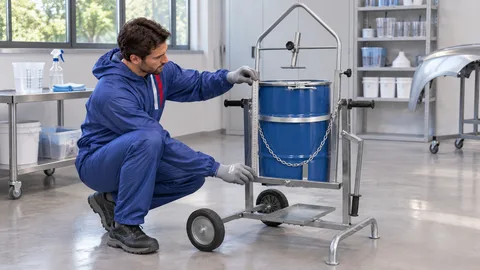
A tilting drum occupies a different area from an upright one. Include its path and operator position. Outlet and receiving vessel must remain accessible.
The catalogue’s 118 × 62 × 17 cm refers to packaging. Do not treat it as the assembled footprint. Request actual equipment dimensions and include the intended drum arrangement.
Coordinate material access and collection
Any collection arrangement must suit the material and process. Its design cannot be inferred from the device name. The same applies to technical installations needed at the station.
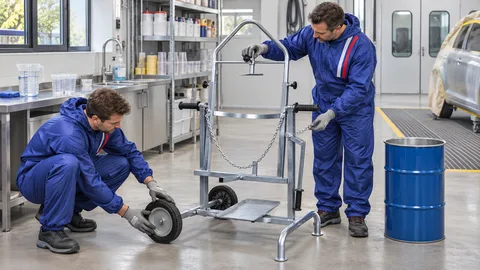
Define places for prepared and used vessels. This keeps material and job assignment visible and shows what remains to be provided.
Remember the return location
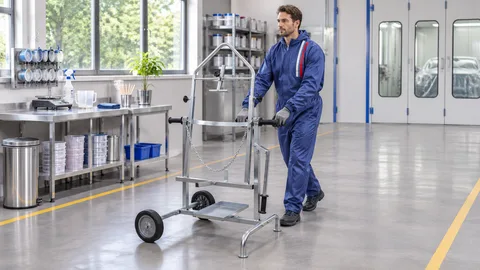
Mobile equipment needs a defined place after use, rather than an improvised position in a walkway. Coordinate use and return with neighbouring work areas.
Check the arrangement using a typical job. Real drums, vessels and operation must fit together; a general time-saving promise cannot replace that assessment.
Relevant BUWO products
Enquire about a drum tipper for your workstation
Send drum dimensions, actual mass and intended workflow. We can discuss the version using your requirements.
Get in touch ↗Sources and information date
Product data: BUWO catalogue, export dated 20 October 2026. Editorial information: 9 November 2026. Confirm the actual version and documentation when enquiring.